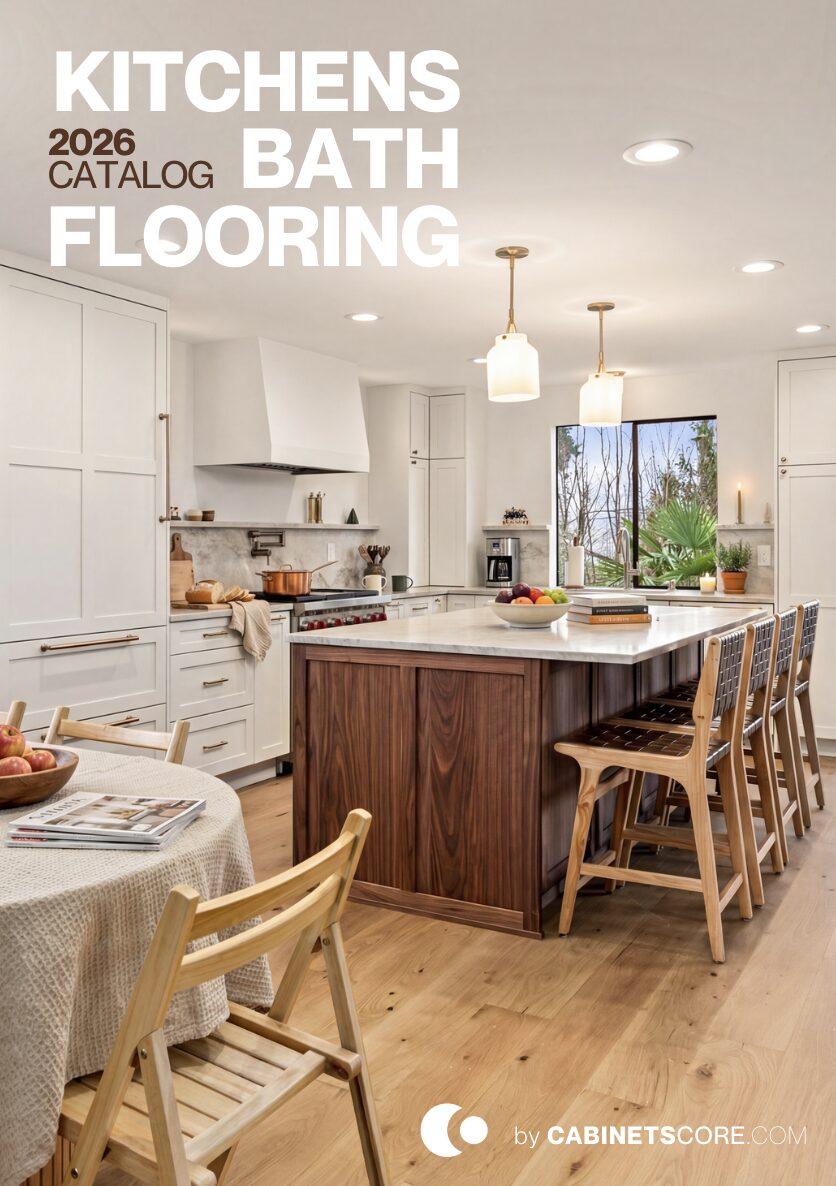
Brown and White Kitchen Renovation in Bellevue — Two-Tone Shaker, White Quartz & Modern Lines
Dark Stained Base Cabinets, White Uppers & a Built-In Bar
Two-tone kitchens are the most common request and the easiest to get wrong. The trap is treating the two colors as equal partners — equal cabinet area, equal visual weight, no clear hierarchy. The result reads as indecisive. This kitchen does the opposite: dark stained shaker on the bases, white shaker on the uppers, with the white given the dominant role visually. The brown grounds the room; the white opens it up. Different jobs, not equal billing.
This was a renovation, not a structural remodel. The footprint stayed the same. What changed: the cabinetry, the counters, the backsplash, the appliances, and the hardware that ties them together.
Why Dark Below, Light Above — Not the Other Way Around
The rule for two-tone kitchens is: heavy color belongs at the floor, light color belongs at the ceiling. It mirrors how rooms read in nature — darker ground, lighter sky — and the eye accepts it without thinking about it.
Flipping the rule (dark uppers, light bases) is what makes most amateur two-tone kitchens feel off. Heavy color above eye level makes the room feel top-heavy and visually compressed, even when the space itself is generous. Dark bases anchor the room, and the eye reads them as the “weight” of the kitchen. White uppers lift the visual line up to the ceiling, which makes the space feel taller and brighter than it actually is. Same cabinetry, opposite effect, depending on where you put each color.
The Stained Wood Question — Brown Without Looking Dated
Dark-stained cabinetry has an honest perception problem: a lot of mid-2000s kitchens used dark cherry or espresso stain everywhere, and those kitchens haven’t aged well. So homeowners get nervous about brown coming back.
The reason this kitchen reads as current and not dated comes down to two details. The stain is matte and even — no orange undertone, no high-gloss finish, no exaggerated grain pattern. And the cabinet style is clean shaker with slim modern hardware, not the raised-panel-with-decorative-knobs look that dates the mid-2000s kitchens. Same wood, different language. Dark cabinetry isn’t the problem; the styling around it was. A disciplined matte stain on a flat shaker door with long brushed nickel pulls reads as modern, full stop.
White Quartz on Every Counter — Why the Continuity Matters
The counters are white quartz across the entire kitchen — perimeter, island, and the bar area — even though the cabinetry colors change beneath them. That continuity is doing more work than it looks.
The decision rule: when you’re already mixing two cabinet colors, don’t introduce a third material change at the counter level. The white quartz becomes the visual bridge between the dark bases and the white uppers, and it lets the eye read the kitchen as one room instead of separate zones. Bringing in a contrasting island counter (butcher block, dark stone, anything else) would have made the kitchen feel chopped up. The discipline is in resisting that — it’s tempting to add another material because it seems “designed,” but restraint reads as designed and addition reads as busy.
The Built-In Bar Cabinet
The lift-up bar cabinet near the kitchen is the kind of detail that distinguishes a project where storage was actually thought through from one where it was just specified. Inside: a built-in glass rack, bottle storage at the back, and enough working surface to make a drink. The exterior door lifts up out of the way instead of swinging — which matters because a swing door on an upper cabinet, fully open during use, is awkward.
Most homeowners don’t think they need a built-in bar until they see one in someone else’s house and realize they’d use it constantly. For homes that entertain regularly, it’s one of the better cabinetry investments — it keeps the bar out of the main work zone, contains the mess, and doesn’t take up dedicated floor space the way a freestanding bar cart does. The bathroom vanities in this project use the same dark shaker cabinetry, which is the simplest way to carry a kitchen’s design language through to the rest of the house without trying to match every detail.