
When planning a kitchen or bathroom remodel, cabinet style isn’t just a design choice – it shapes how your space functions, feels, and ages over time. One of the most common questions we hear in our Auburn showroom is:
“What’s the actual difference between framed and frameless cabinets – and which one is right for my home?”
The answer isn’t about what’s “better.” It’s about understanding how each cabinet construction works and how it fits your lifestyle, home style, and long-term expectations.
Let’s break it down clearly.
Framed Cabinets: The Timeless American Standard
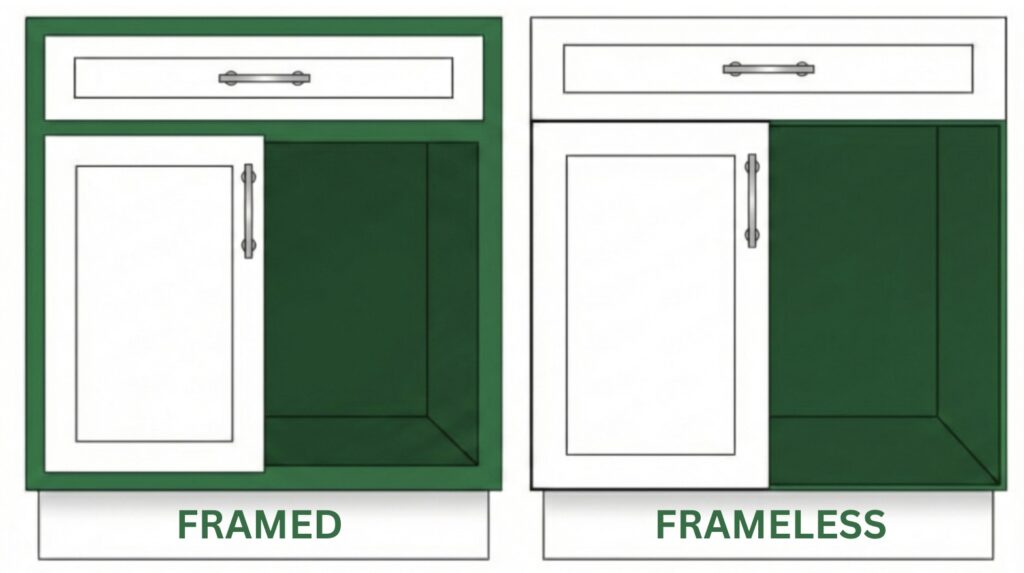
Framed cabinets are the most traditional and widely used cabinet construction in North American homes. They feature a solid wood face frame attached to the front of the cabinet box. Doors and drawers are mounted to this frame, creating a strong, structured foundation.
This construction style is incredibly forgiving – especially in older homes where walls aren’t perfectly straight. The face frame provides flexibility during installation and adds long-term durability, which is why framed cabinets have remained a reliable choice for decades.
From a design standpoint, framed cabinets work beautifully in traditional, transitional, and farmhouse kitchens, but they’re far from outdated. With full-overlay doors, modern finishes, and contemporary hardware, framed cabinets can feel just as current as any European-style design.
Why homeowners choose framed cabinets:
They want durability, classic proportions, and a cabinet system that adapts easily to different door styles.
Frameless Cabinets: Clean, Modern, and Efficient
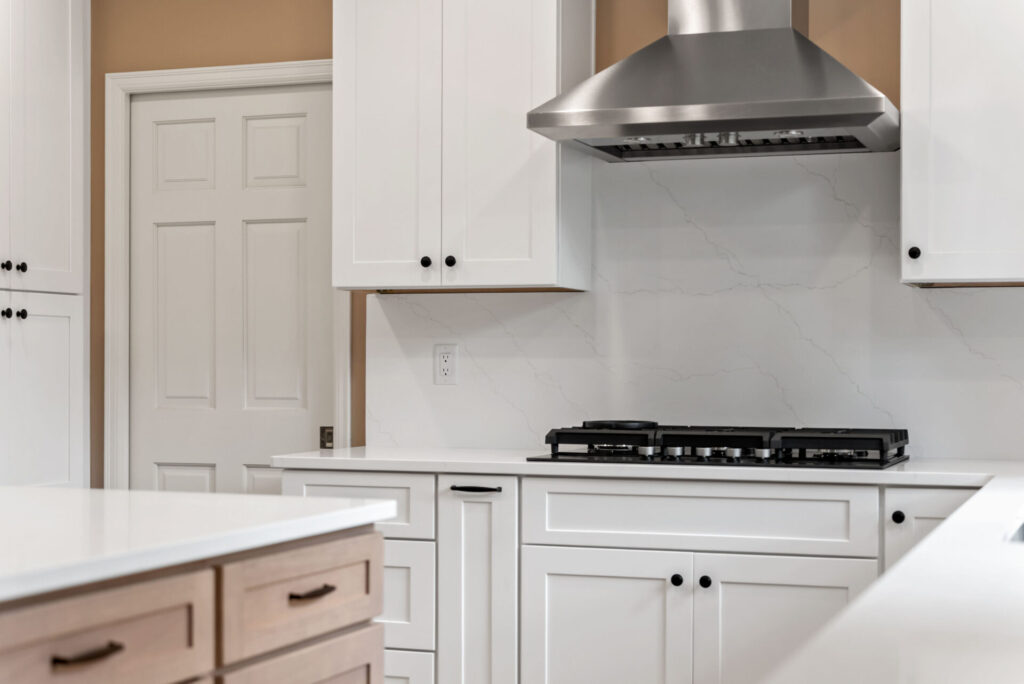
Frameless cabinets — often called European-style cabinets — remove the face frame entirely. Doors and drawers attach directly to the cabinet box, creating a sleek, uninterrupted look.
Because there’s no frame taking up space, frameless cabinets offer slightly more usable interior storage and wider drawer openings. This makes them especially appealing in modern kitchens, condos, and homes where clean lines and efficiency matter.
However, frameless cabinetry relies heavily on precise manufacturing and installation. The cabinet box itself must be thicker and stronger to compensate for the lack of a frame, which is why quality matters significantly more in frameless construction.
Why homeowners choose frameless cabinets:
They prioritize modern aesthetics, maximum accessibility, and a streamlined look — especially in contemporary or minimalist kitchens.
Comparing the Three – Without Overthinking It
Rather than focusing on pros and cons lists, it’s more helpful to think about how each cabinet type lives in your home.
Framed cabinets are forgiving, durable, and versatile — ideal for most homes and long-term living. Frameless cabinets feel modern and efficient, especially in newer construction or design-forward kitchens.
None of these styles are trends. They’re tools — and the right one depends on your space, not a headline.
So, Which Cabinet Style Is Right for You?
That decision becomes much clearer when you can see and touch the difference.
At Cabinets Core, we guide homeowners through these options every day — not with pressure, but with clarity. We consider your home’s architecture, your storage needs, and how you plan to live in the space five, ten, even twenty years from now.
Visit our Auburn showroom to explore framed and frameless cabinets side by side.
Book a free 3D kitchen design and in-home measurement and make your decision with confidence, not guesswork.
Because the right cabinets don’t just look good – they make your home work better.

You must be logged in to post a comment.