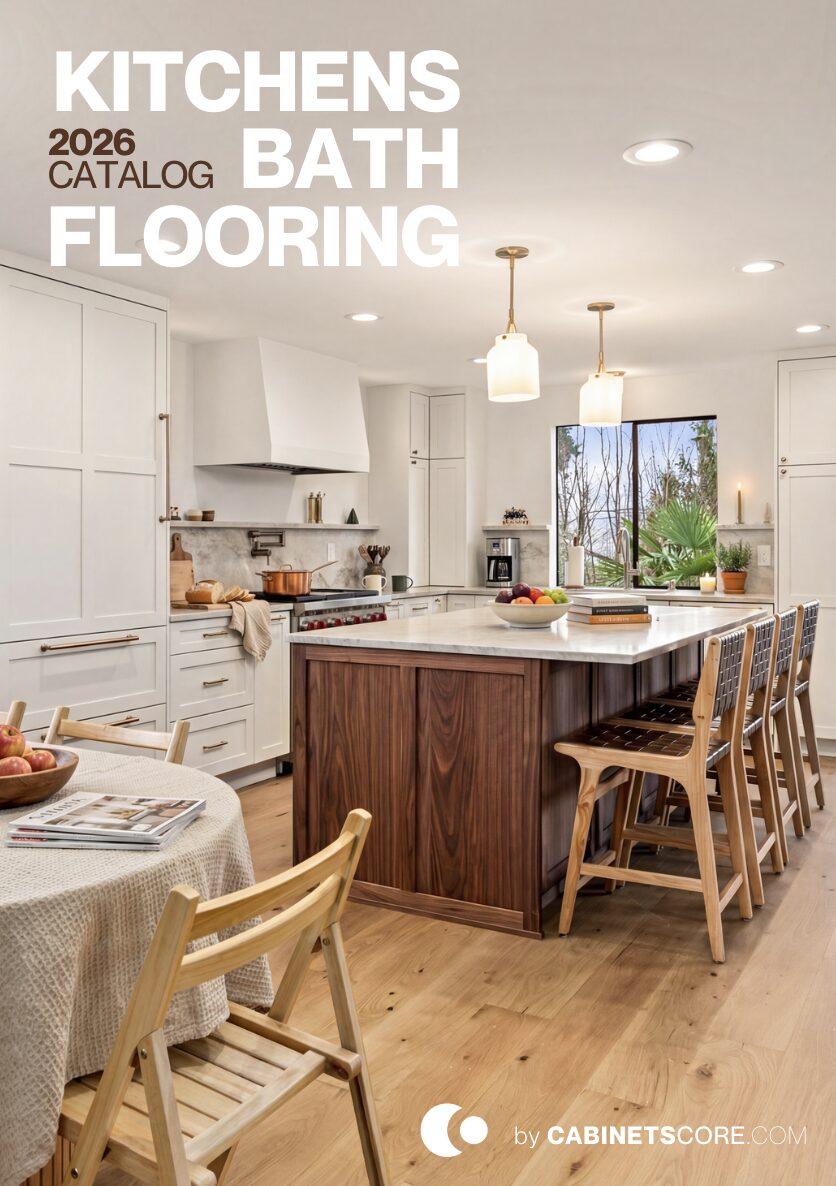
Edmonds Kitchen Remodel with Walnut Island & White Perimeter Cabinetry
Semi-Custom Bellmont, Panel-Ready Appliances & a Built-In Window Bench
The homeowners didn’t want a showroom kitchen. They wanted a room that worked for how they actually use it — morning coffee by the window, regular cooking, occasional entertaining — and they wanted it to feel warm without feeling heavy. The remodel was built around those specifics, not around a generic “open and inviting” brief.
If you’re looking at kitchen remodel projects in the Edmonds area and want a clear picture of what a mid-scope remodel involves — timeline, materials, real decisions — this one’s worth walking through.
How Long This Actually Took
The phrase “kitchen remodel” hides a lot of variation in timeline. For this project, here’s what each phase actually took:
- Design and material selection: ~3 weeks. Most of this is decision time, not drafting. The homeowners needed to sit with cabinet samples, finish swatches, and layout options before committing.
- Cabinet production and delivery: ~6 weeks. We used Bellmont, a semi-custom line, which means the cabinets are built to your specs but use standardized components. That keeps lead times reasonable — fully custom cabinetry can run 10–14 weeks.
- Site prep and cabinet install: 4–6 days. This is the part that looks fast because most of the work happened before the truck showed up.
- Final detailing and trade coordination: 2–4 weeks. Countertop templating, appliance hookup, punch list, the inevitable adjustments. This phase is where most projects feel slow, and it’s where rushing causes problems.
Total: roughly 12–14 weeks from design kickoff to a finished kitchen. Faster than a from-scratch custom build, longer than a finish-only refresh.
Why Walnut on the Island, White Everywhere Else
The two-tone choice wasn’t aesthetic. It was structural to how the room feels.
A full walnut kitchen would have closed the space down — walnut is a strong, warm wood, and using it on the perimeter would have made the room feel smaller than it is. Walnut only on the island and bar area gives you the warmth and depth in the spots that matter visually, without overwhelming the room.
The perimeter cabinetry is alabaster white. It’s deliberately quiet. White perimeter + walnut feature is one of the few two-tone combinations that doesn’t date quickly, because the contrast is structural rather than trendy — it pulls the eye to the island, which is where the homeowners spend most of their time.
A practical note about the existing oak floors: they’re warm-toned and stay. Walnut layers naturally on top of oak; white grounds it. An all-walnut kitchen on oak floors would have read as too much wood. Worth saying because we see homeowners default to “more wood = more warm” — usually it’s the opposite.
Why We Used Bellmont (And When We Wouldn’t)
Bellmont is semi-custom, which means you get flexibility on sizing, finishes, and configuration without the lead times or price tag of fully custom millwork. For this kitchen, it was the right call for three specific reasons:
- The homeowners wanted panel-ready integration for the fridge and dishwasher. Bellmont handles that cleanly without requiring custom panels built separately.
- The lift-up garage door cabinet in the bar area is a Bellmont-standard mechanism. Custom-fabricating that hardware would have added cost and risk.
- The built-in seating bench by the window needed to match the perimeter cabinetry exactly. Semi-custom lines hold finish consistency better than mixing a custom piece into a stock line.
When we wouldn’t recommend semi-custom: if you have unusual ceiling heights, oddly shaped walls, or want to specify hardwood species and joinery details beyond a standard catalog. In those cases, full custom is worth the wait.
The Features the Homeowners Actually Asked For
Most of what makes this kitchen feel “intentional” isn’t visible at first glance. It’s the storage and integration decisions:
- Panel-ready appliances — fridge and dishwasher disappear into the cabinetry. The eye reads continuous wood and white, not a row of appliances.
- Custom window bench — a built-in seating spot where the homeowners drink coffee in the morning. Not a design flourish; they asked for it specifically.
- Pull-out trays, drawer organizers, spice racks — the unglamorous stuff that determines whether a kitchen stays organized six months in.
- Lift-up garage door cabinet in the bar area — replaces upper cabinet doors that would otherwise stay open and look cluttered during use.
- Minimal wall cabinetry overall — fewer uppers means more open wall, which is why the room reads larger than its footprint.
What This Kind of Remodel Gets You
A two-tone, semi-custom remodel like this lands in the middle of the cost and complexity range. It’s more involved than a cabinet refacing or finish refresh — there’s structural work, integrated appliance planning, and a built-in feature (the bench) that requires real coordination. But it’s less than a from-scratch custom build that includes moving walls or relocating major plumbing.
For the right homeowner, this is the sweet spot. You get a kitchen that’s genuinely tailored — panel-ready integration, custom storage, a real built-in — without the timeline and budget of a top-to-bottom rebuild.
If you’re planning a kitchen remodel in Edmonds or anywhere in the Seattle area and want a team that’ll tell you which parts are worth the spend, Cabinets Core can walk you through it. Most projects don’t need everything. Knowing what to skip is half the job.