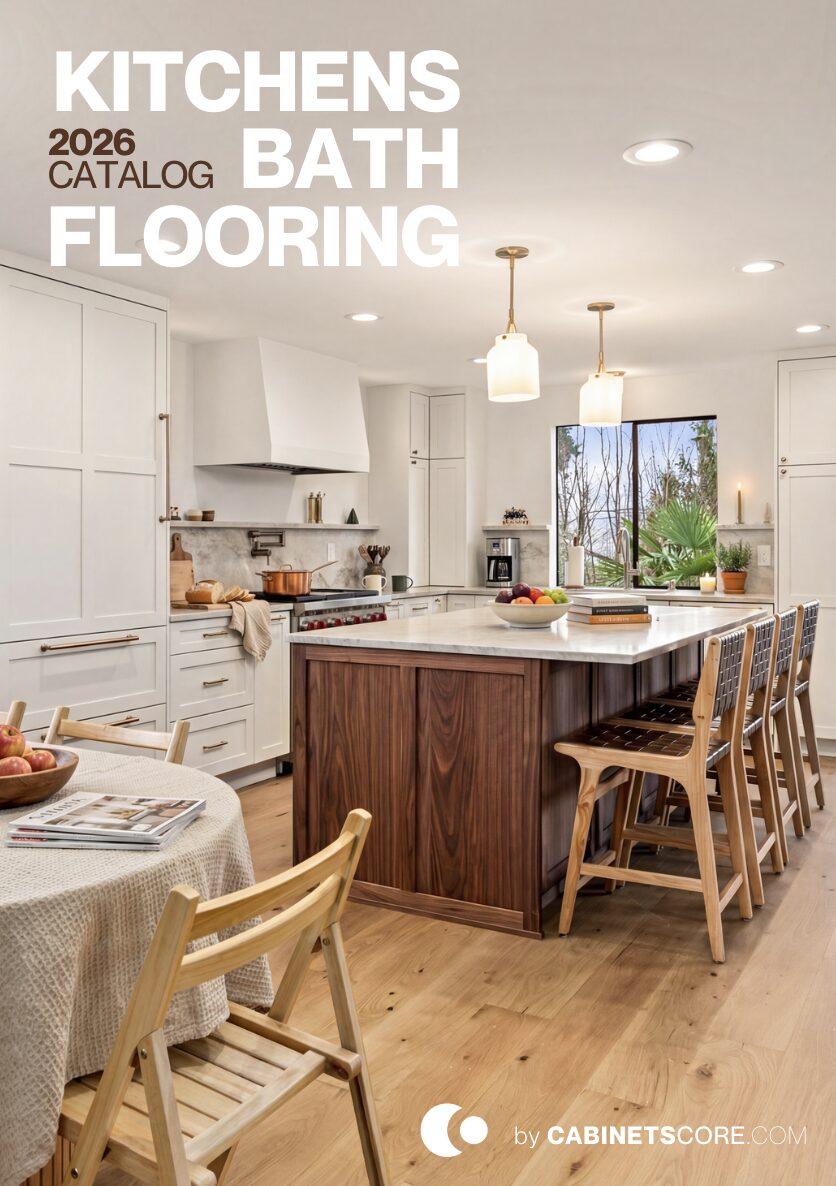
Seattle Kitchen Renovation — White Shaker, Marble-Look Quartz & a Master Bath to Match
Stacked Uppers, Brass Hardware & a Waterfall Island Edge
White-on-white kitchens get dismissed as a default — the safe choice when you can’t decide on anything else. This one isn’t that. It’s a deliberate white kitchen, which is a different thing entirely. Every white surface in the room is doing a specific job, and the details that aren’t white — the brass hardware, the wood slat detail under the island, the strong marble veining on the counters — are what keep the room from reading as flat or generic.
This was a renovation, not a structural remodel. The footprint stayed the same. What changed: the cabinetry, the counters, the backsplash, the appliances, and the coordinated master bathroom done on the same project.
Why the Uppers Go to the Ceiling
The single biggest visual decision in this kitchen is something most homeowners don’t notice consciously: the wall cabinets run all the way up. No soffit, no awkward gap, no row of decorative items collecting dust on top.
Standard upper cabinets stop short of the ceiling because it’s cheaper to install and easier to standardize. The downside is a strip of dead space that always looks unfinished. Running cabinets to the ceiling does three things: it adds real storage at the top (deep seasonal items you don’t need often), it makes the room feel taller because the eye travels up the full wall, and it eliminates the visual break that makes most kitchens look “almost done.” It costs more in cabinetry and trim. For a kitchen meant to read as designed, it’s the right call.
Marble-Look Quartz, Not Marble — And Why It Matters
The counters look like Calacatta marble. They’re not. They’re marble-look quartz, and that’s a deliberate choice we recommend in almost every kitchen we do.
Real marble is beautiful and has real problems. It stains. Coffee, red wine, lemon juice, tomato sauce — all of those etch or stain marble within minutes. You can seal it, but the sealer wears off and has to be reapplied. For a working kitchen, real marble means living with permanent damage or living defensively around your counters. Quartz with marble veining gives you the visual — the cool tone, the dramatic vein patterns, the brightness — without the maintenance. The veining in this project is bold on purpose; pale or muted veining would have read as generic stone instead of high-end marble.
The Master Bath — Same Family, Different Mood
The master bathroom uses the same white shaker cabinetry and the same brass finish family as the kitchen. That repetition is what makes the project feel like one home rather than two separately renovated rooms.
Where the bathroom diverges is intentional: a crystal chandelier instead of brass pendants, soft marble mosaic tile on the shower walls instead of picket tile on the backsplash, and a freestanding tub as the focal point — none of which would belong in the kitchen, all of which feel right here. The rule is the same one we apply across every multi-room renovation: pick one or two materials to carry across rooms, then let each space have its own moments. In this house, the carry is the white shaker door and the brass hardware. Everything else adapts to the room it’s in.
When a Coordinated Kitchen-and-Bath Renovation Is Worth It
Renovating the kitchen and the master bath as one project costs more upfront than doing the kitchen alone — but it’s almost always cheaper than doing them in sequence over a few years. Cabinetry, hardware, and trim get ordered in one batch. Trades coordinate once. Design decisions get made together, which is what produces actual continuity between rooms instead of two renovations that were each fine on their own but don’t quite match.
If you’re planning a kitchen renovation in Seattle and a master bathroom is on the list within the next two or three years, doing them together usually saves money and produces a better-looking result. Cabinets Core can walk you through what coordinates well across rooms and what should stay specific to each space.