
When you’re saving inspiration photos for your dream kitchen, it’s easy to notice the color and veining of a countertop and overlook something that quietly shapes the whole look: how thick the slab is. Countertop thickness isn’t just a technical spec your fabricator sorts out behind the scenes. It’s a design decision that affects the feel of the room, the edge profiles available to you, how the counter is supported, and what you’ll pay.
This brief guide walks through the standard thickness options, what each one is best for, and how to choose the right depth for your space. If you’d rather see and touch full slabs in person, you can do that any time at our Auburn showroom.
Key Takeaways
- The two most common countertop thicknesses are 2cm (about ¾”) and 3cm (about 1¼”). Both are widely used; 3cm is the most popular in North America for kitchens.
- 3cm reads as more substantial, grounded, and architectural — a strong choice for islands and statement surfaces, and it often doesn’t need plywood support underneath.
- 2cm feels sleeker and more modern, keeps visual weight down, and can lower material and shipping cost, but usually needs a plywood substrate for support.
- 1cm is a thin, lightweight option best reserved for vertical uses like backsplashes, shower walls, and shelving — not high-traffic kitchen counters.
- Thickness also drives which edge profiles look right and whether you can “build up” the edge to appear thicker than the slab actually is.
The Standard Thickness Options
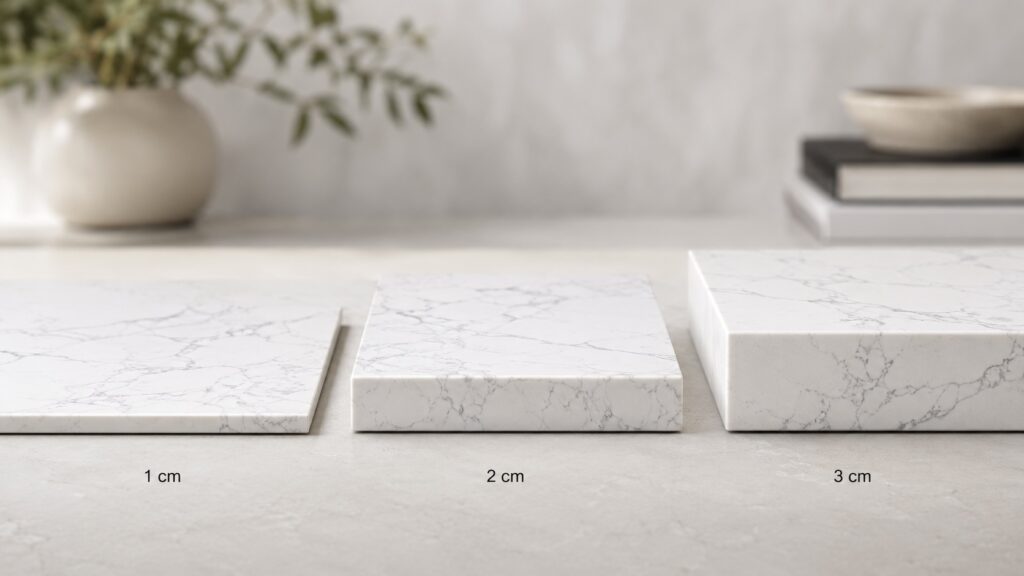
Most quartz and natural stone countertops come in a few standard slab thicknesses. Here’s how they compare.
3cm (about 1¼ inch)
Three-centimeter slabs are the default for most modern kitchens, and for good reason. The added depth gives a countertop a solid, high-end presence that reads as durable and permanent. Structurally, 3cm is strong enough that it typically installs directly on the cabinets without a plywood support layer underneath, and it handles overhangs and seams well.
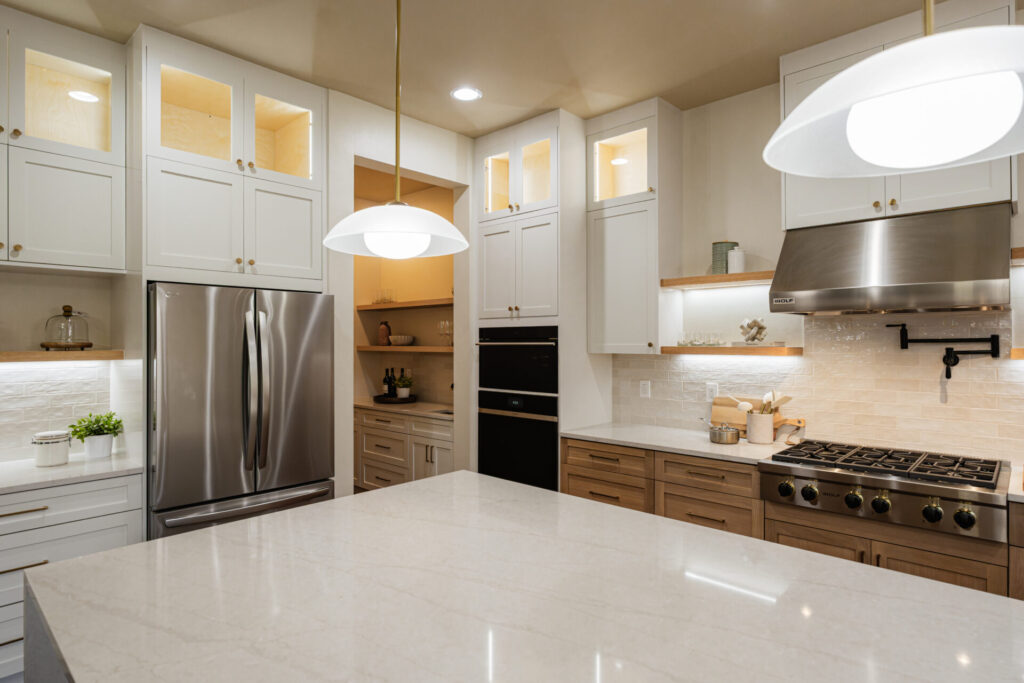
Design-wise, 3cm feels grounded and luxurious. It’s the go-to for a kitchen island you want to act as the centerpiece of the room, and it stands up visually to taller cabinetry, coffered ceilings, or bold materials elsewhere in the space.
2cm (about ¾ inch)
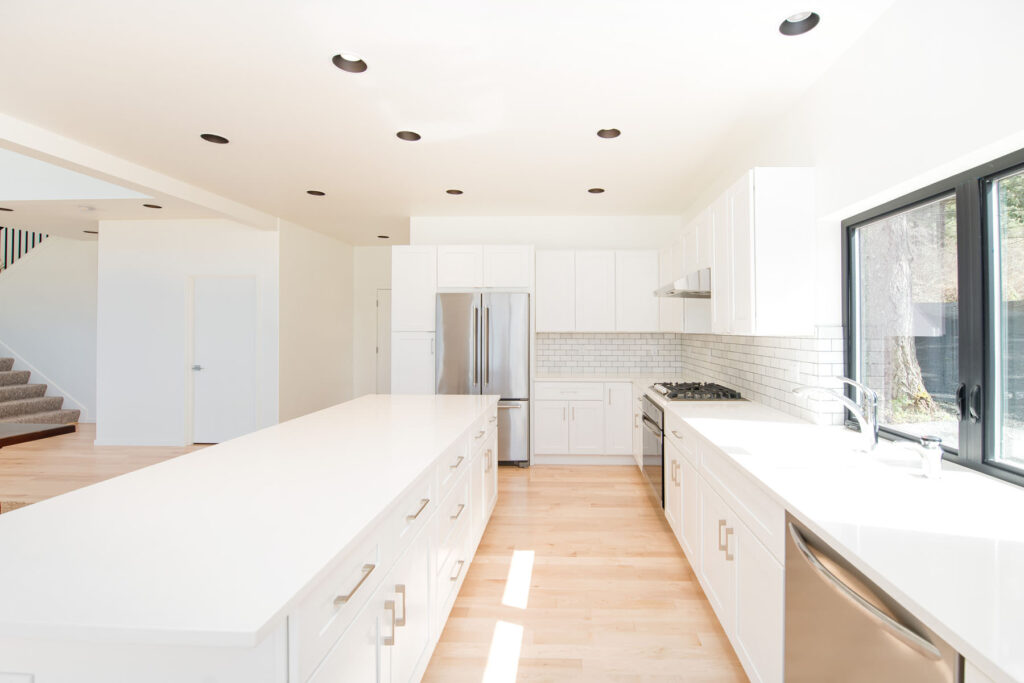
Two-centimeter slabs create a lighter, sleeker, more contemporary look. By reducing the visual weight of the counter, a 2cm profile lets the color and veining of the material take center stage rather than the edge. It’s a favorite in minimalist and European-style kitchens.
A couple of practical notes: because 2cm is thinner, it’s usually installed over a plywood substrate for support, especially on runs with overhangs. It can also be more economical on material and is lighter to transport and handle. If you love the clean look of 2cm but still want a beefier edge somewhere — say, on the island — that’s where built-up edges come in (more on that below).
1cm
One-centimeter slabs are the thinnest option and are generally not recommended for everyday kitchen countertops, where they lack the strength for spans and overhangs. Where 1cm shines is vertical and low-load applications: backsplashes, full-height shower walls, wall cladding, feature walls, and floating shelves. It gives you the same easy-care, non-porous surface in a lighter, more minimalist package.
Built-Up and Mitered Edges: Getting a Thicker Look
You’re not limited to the raw slab thickness. Both 2cm and 3cm slabs can be fabricated with a mitered (built-up) edge, where a strip of the same material is bonded to the underside of the edge to make the counter appear much thicker — 4cm, 6cm, or even a dramatic waterfall-style profile — while keeping the weight and cost of the full slab down.
When it’s done well, the mitered seam essentially disappears and you get the substantial look of a thick slab at a fraction of the material. This is one of the most useful tricks in countertop design: use a standard slab for most of the kitchen, then build up the island edge for a bold focal point. It’s worth discussing with your fabricator early, because a clean miter takes skill and adds to the labor.
How Thickness Affects the Feel of a Kitchen
Countertop thickness should be designed, not just picked off a list. A few principles our design team uses:
- Match the counter to the room’s scale and cabinetry. A thicker bottom rail on your upper cabinets, tall ceilings, or a large island all pair naturally with a thicker (3cm or built-up) counter. In a smaller or more minimalist kitchen, a 2cm profile can feel more balanced.
- Thicker reads as an architectural statement; thinner reads as refined and modern. Neither is “better” — it depends on the story you want the room to tell.
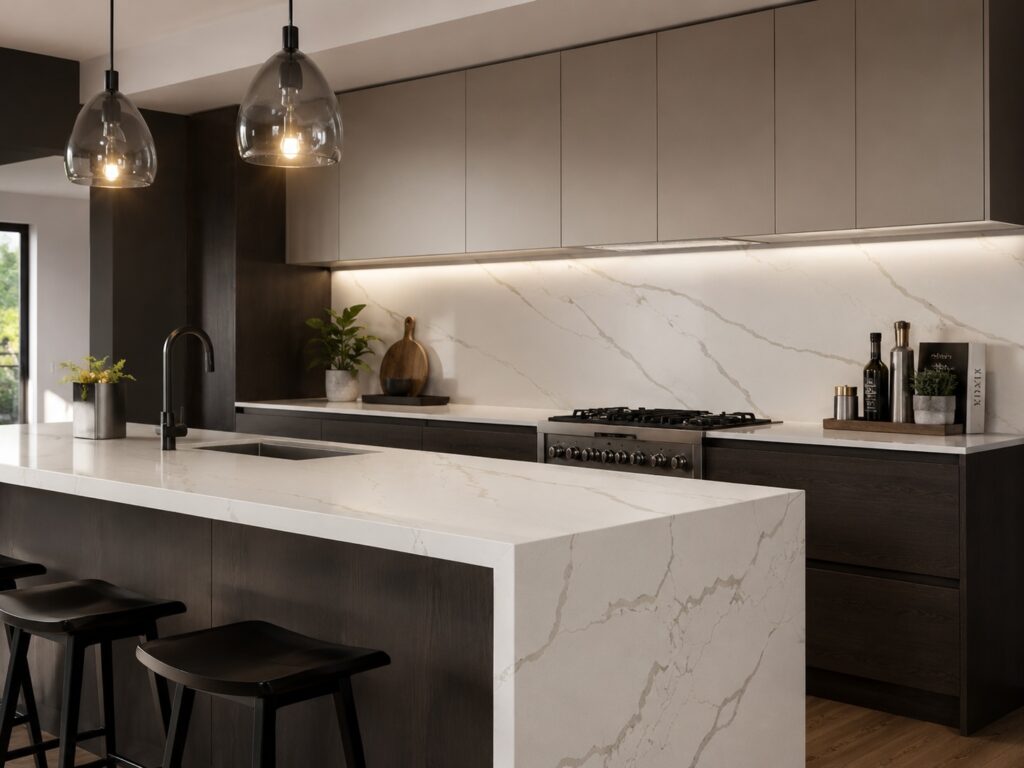
- Vary thickness on purpose. A popular high-end move is a thinner perimeter counter with a thicker island, or a waterfall island against slim perimeter runs. Mixing depths adds subtle drama and guides the eye through the space.
Thickness Meets Edge Detail
Edge profiles are where thickness becomes expressive, and the two decisions go hand in hand.
With 2cm counters, designers usually favor clean, minimal edges — a simple eased or square edge — that preserve the crisp, contemporary line and keep the surface feeling light.
With 3cm or built-up counters, there’s more room to play. Eased edges gain presence, and more sculpted profiles like bullnose or ogee feel balanced against the extra depth rather than fussy. If you want an ornate edge, you generally want the thickness to carry it.
A Quick Way to Decide
If you’re not sure where to land, this is roughly how we’d guide a homeowner:
- Want the most popular, low-worry choice for a kitchen? Go 3cm.
- Love a sleek, modern, minimal look and want to manage cost? Go 2cm (with a plywood substrate) — and consider a built-up edge on the island for contrast.
- Working on a backsplash, shower wall, or shelves? 1cm is your friend.
- Want a bold, thick island edge without the cost of a solid slab? Ask about a mitered, built-up edge.
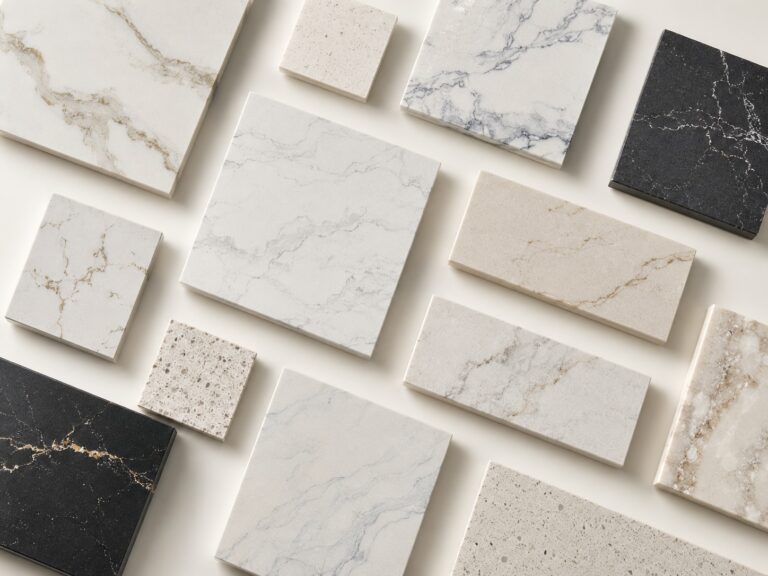
The best way to make the call is to see the thicknesses side by side and hold the edge samples in your hand — proportions that look one way in a photo often feel different in person.
See It in Person at Our Auburn Showroom
At Cabinets Core, we help homeowners across Auburn, Kent, Federal Way, Renton, Tacoma, Bellevue, and the greater Seattle area choose the right countertop — thickness, material, edge, and all — for how they actually live. In our Auburn showroom you can compare 2cm and 3cm profiles, see edge samples, and view full quartz and granite slabs before you commit.
Every project includes free design consultation, free in-home measurement, and professional templating and installation by our own licensed crew — one team from design to done, no subcontractor runaround.
[Book a free consultation] or [visit the Auburn showroom] to get started.
Frequently Asked Questions
What is the most common countertop thickness? In North American kitchens, 3cm (about 1¼”) is the most common and popular thickness. 2cm (about ¾”) is also widely used, especially for a sleeker, more modern look or to help manage cost.
Is 2cm or 3cm better for a kitchen? Neither is objectively better — it depends on your look and budget. 3cm feels more substantial and usually installs without a plywood support layer, making it a low-worry default. 2cm is thinner and more modern, is often more economical, and typically uses a plywood substrate for support.
Do thinner (2cm) countertops need extra support? Usually, yes. 2cm slabs are commonly installed over a plywood substrate, particularly on overhangs and longer spans, to give them the necessary strength. Your fabricator will advise based on your layout.
Can a thin slab look thick? Yes. Using a mitered, built-up edge, a fabricator bonds a strip of the same material to the underside of the edge so the counter appears 4cm, 6cm, or thicker while keeping the weight and material cost of the standard slab.
What thickness is best for a backsplash or shower wall? For vertical applications like backsplashes, shower walls, wall cladding, and floating shelves, 1cm slabs are ideal — they’re lightweight and give a minimalist look while keeping the same easy-care surface.
Does thicker countertop cost more? Generally 3cm costs more than 2cm because it uses more material and is heavier to ship and handle. A built-up edge on a 2cm slab can give a thick appearance for less material than a solid thick slab, though it adds fabrication labor. The best way to compare real numbers for your project is a free quote.