
Green shaker cabinets have quietly become one of the most requested looks in modern kitchen design — and for good reason. They blend the clean, classic lines of shaker cabinetry with a color that feels both fresh and grounded. Whether you lean toward a soft sage or a moody forest green, the combination offers a warmth that all-white kitchens often miss while still feeling timeless rather than trendy.
If you’re weighing green shaker cabinets for a remodel or new build, this guide walks through everything that matters: why the style works, how to choose the right shade, what to pair it with, and how to keep it looking great for years.
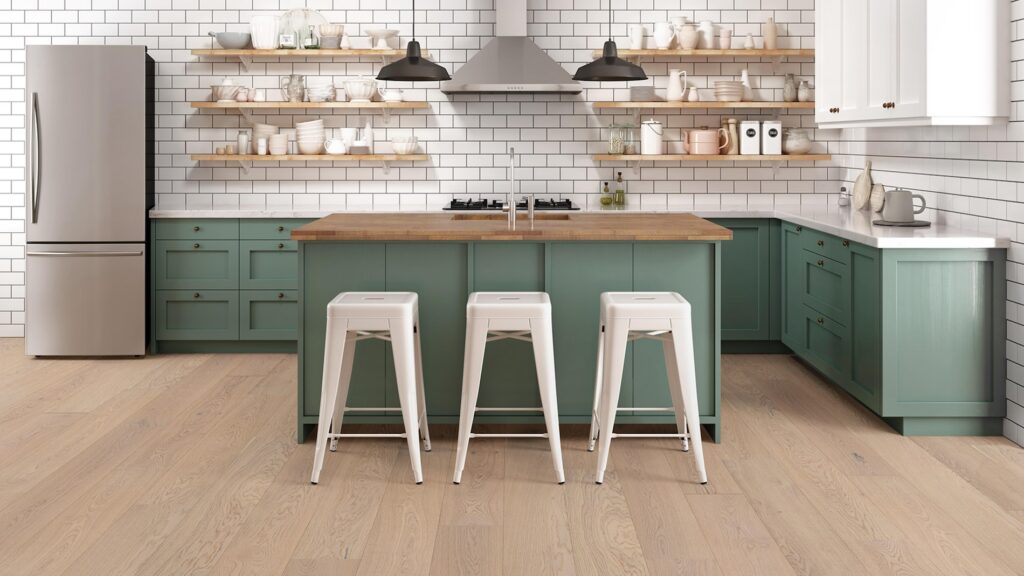
Why Green Shaker Cabinets Work So Well
Shaker cabinets are defined by their simple five-piece door with a recessed center panel and flat, square edges. That minimal profile has been popular for over a century because it suits nearly any kitchen — traditional, transitional, farmhouse, or modern.
Green adds personality without overwhelming the space. Unlike bold reds or blues, most greens read as a near-neutral. They borrow from nature, which makes them easy to live with day to day and surprisingly forgiving when it comes to coordinating with other materials. The result is a kitchen that feels intentional and calm rather than loud.
A few reasons homeowners keep choosing this combination:
- Versatility. Green pairs beautifully with wood tones, white, black, brass, and natural stone.
- Warmth. It softens a room in a way that stark white cabinetry can’t.
- Staying power. Green has cycled through kitchen design for decades, so it’s unlikely to feel dated quickly.
- Resale appeal. Done in a tasteful shade, it photographs well and broadens buyer interest.
Choosing the Right Shade of Green
Not all greens behave the same way, and the shade you choose sets the entire mood of the kitchen. Lighting, room size, and the finishes you already have should all guide the decision.
Sage and Soft Greens
Sage is the crowd favorite for a reason. It’s muted, slightly gray, and reads almost like a soft neutral. Sage green shaker cabinets brighten small kitchens and pair effortlessly with white counters and warm wood floors. If you want something gentle that won’t dominate, this is the safest place to start.
Olive and Earthy Greens
Olive and other earthy greens bring a vintage, lived-in feel. They lean warm and work especially well with brass hardware, terracotta, and natural materials. These shades suit cottage and Mediterranean-inspired kitchens.
Forest and Deep Greens
Forest green, hunter green, and emerald deliver drama. Deep green shaker cabinets feel rich and sophisticated, particularly on a kitchen island or lower cabinets. They shine in spaces with plenty of natural light, since darker tones can make a small, dim kitchen feel closed in. Balance them with lighter walls and reflective surfaces.
A quick tip: always test paint or finish samples on the actual cabinet doors and view them at different times of day. Greens shift dramatically between morning light and evening lamplight.
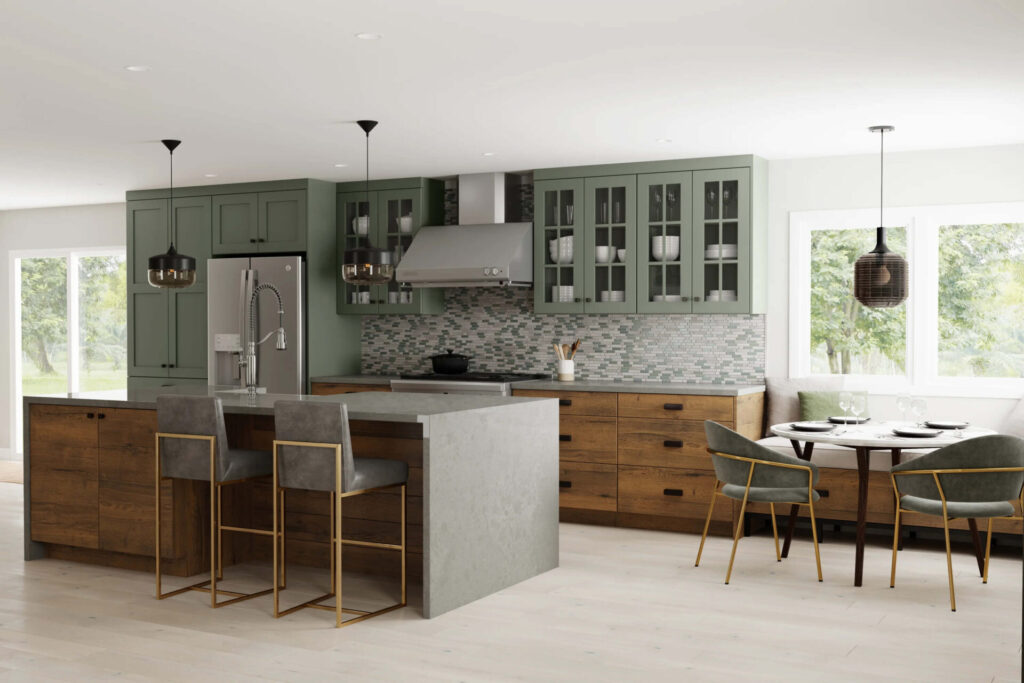
What to Pair With Green Shaker Cabinets
The right pairings are what take green cabinets from nice to genuinely stunning. Here’s how to coordinate the key elements.
Countertops
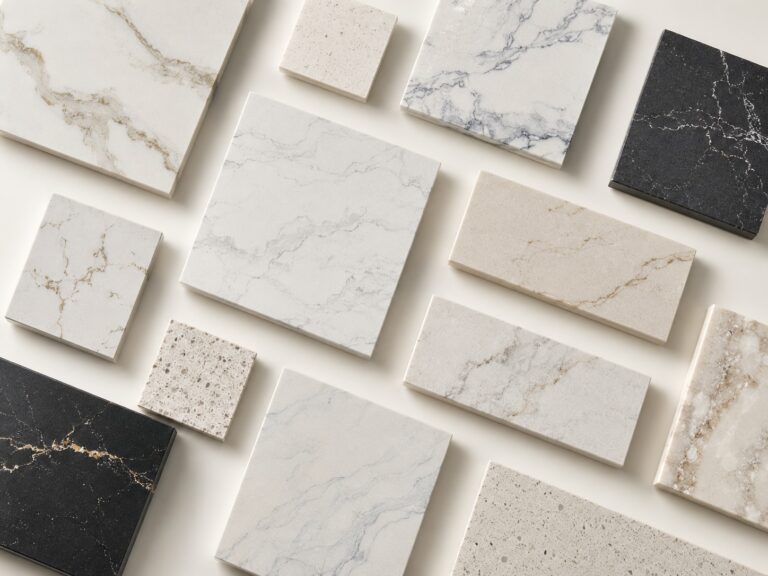
White and light-toned countertops — quartz, marble, or marble-look surfaces — keep things bright and let the cabinets be the star. For a more organic look, butcher block or warm wood counters complement earthy greens. If you’ve gone deep forest green, a veined white or soft gray stone adds contrast and keeps the space from feeling heavy.
Hardware
Hardware is where you set the tone. Brass and gold finishes bring warmth and a touch of luxury, and they’re the go-to choice for both sage and forest greens. Matte black offers a crisp, modern contrast, while brushed nickel keeps things understated. Avoid over-mixing metals; pick one dominant finish and use it consistently.
Backsplash
A simple white subway tile keeps green cabinets looking clean and classic. For more interest, consider a zellige tile with subtle variation, or a natural stone slab backsplash that echoes the countertop. Busy, multicolored backsplashes tend to compete with the cabinets, so restraint usually wins.
Walls and Flooring
Soft whites, creams, and warm beiges on the walls let green cabinetry breathe. For flooring, natural wood — especially mid-tone oak — is a reliable partner. Lighter floors keep the room airy, while darker floors ground deeper green tones.
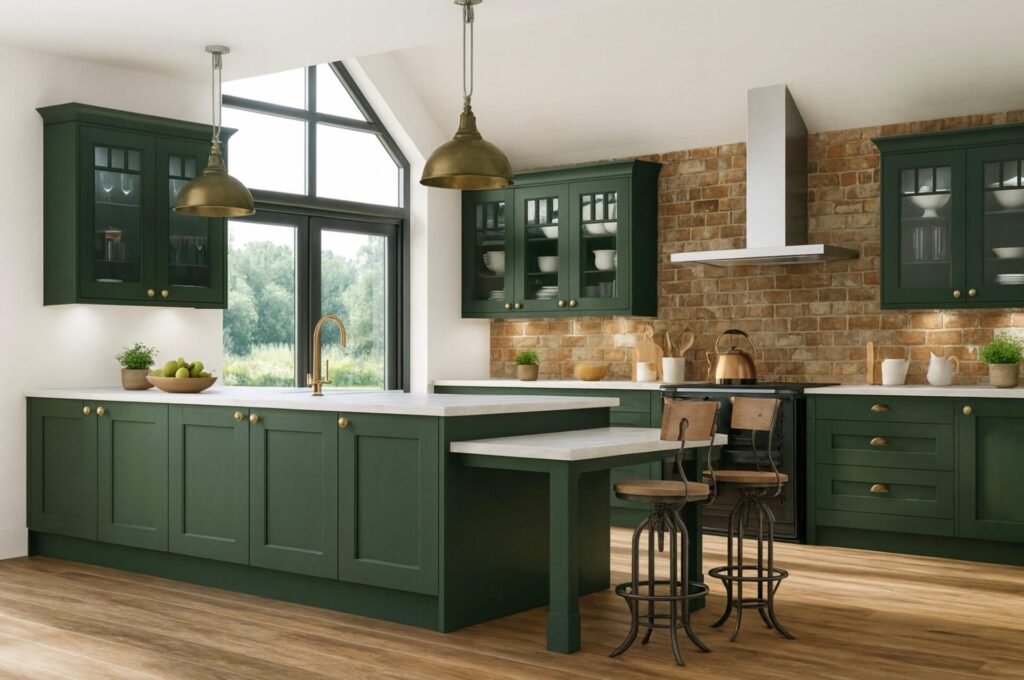
Two-Tone Kitchen Ideas
One of the smartest ways to use green is to commit to it only partially. Two-tone kitchens have surged in popularity, and green is a natural fit.
Try green shaker cabinets on the lower cabinets and island, paired with white or cream uppers. This keeps the room feeling open and bright while still delivering that grounded, custom look. Alternatively, paint just the island in a deep green to create a focal point in an otherwise neutral kitchen. This approach is also budget-friendly since you’re refinishing fewer doors, and it lowers the risk if you’re nervous about committing to color everywhere.
Pros and Cons to Consider
Before you commit, it helps to weigh the trade-offs honestly.
The upsides: green shaker cabinets are distinctive without being risky, they hide minor scuffs better than pure white, and they work across many design styles. They also tend to age gracefully.
The things to plan for: custom or specialty paint colors can cost more than standard white finishes. Very dark greens can shrink a small or low-light kitchen visually. And if you choose a highly specific trend shade, you may want to keep surrounding finishes neutral so the room is easier to refresh later.
Caring for Green Shaker Cabinets
Maintenance is straightforward. Wipe doors with a soft, damp cloth and a mild dish-soap solution, then dry them to avoid water spots. Skip abrasive scrubbers and harsh chemicals, which can dull or strip painted finishes over time. Clean up grease and splatters promptly, especially near the stove. If you ever need a touch-up, keep a small amount of the original paint or finish on hand — matching a color years later is far harder than storing a leftover can.
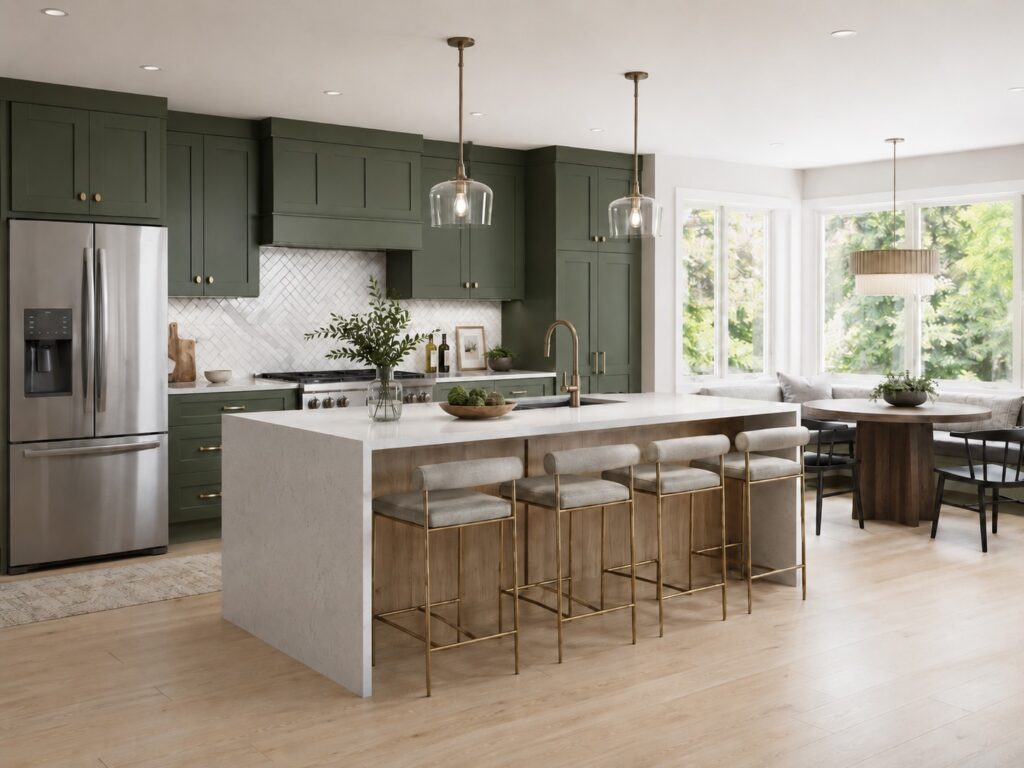
Frequently Asked Questions
Are green shaker cabinets going out of style? Green has appeared in kitchens for generations and continues to be a designer favorite. Choosing a classic shade like sage or forest green, rather than a fleeting trend color, helps the look stay relevant.
What’s the best green for a small kitchen? Lighter shades like sage keep small kitchens feeling open and bright. If you love deep green, limit it to an island or lower cabinets and keep walls and counters light.
What hardware looks best with green cabinets? Brass and gold are the most popular choices and add warmth. Matte black offers a modern, high-contrast alternative.
Do green cabinets work with white countertops? Yes — white and light counters are one of the most reliable pairings, providing brightness and contrast that let the cabinets shine.
Final Thoughts
Green shaker cabinets hit a rare sweet spot: distinctive enough to feel custom, classic enough to last. The key is choosing a shade that fits your kitchen’s light and size, then coordinating countertops, hardware, and backsplash with a light touch. Whether you go all-in on forest green or test the waters with a sage island, the result is a kitchen that feels warm, current, and unmistakably yours.
Ready to plan your space? Start by ordering a few sample doors in your top shades and living with them for a week before you commit.