
Coffee has quietly become one of the most influential forces in kitchen design. As home brewing has grown more serious — espresso machines, pour-over setups, milk frothers, grinders — kitchens have adapted to give all that gear a proper home. The result is a fast-growing trend: the built-in coffee bar, sometimes scaled down to a compact espresso corner.
Rather than crowding the main countertop with appliances, homeowners are carving out a dedicated zone for their morning routine. Done well, it’s both practical and a genuine design feature. Here’s how to plan one that fits your space, your habits, and your kitchen’s style.
Why Coffee Bars Have Become a Kitchen Staple
A few shifts explain the trend. More people are recreating the café experience at home, which means more equipment and more reasons to keep it organized. At the same time, open-concept kitchens have made counter clutter more visible, so there’s pressure to contain the chaos. A built-in coffee bar solves both problems: it concentrates everything in one tidy spot and frees up the rest of your prep space.
There’s also a lifestyle element. A dedicated coffee station turns a daily habit into a small ritual, and it gives guests an obvious place to help themselves. For many homeowners, it’s one of the most-used corners of the entire kitchen.
Where to Put a Coffee Bar
Placement is the first and most important decision. The best location depends on your layout and how much room you can spare.
- End of a counter run. The simplest option. Dedicate the last 24 to 36 inches of an existing countertop to coffee, ideally near a water source and away from the main cooking zone.
- A dedicated nook or alcove. If you have a recessed wall or an unused corner, build cabinetry into it for a true station. This reads as intentional and custom.
- Inside a cabinet or armoire. A tall cabinet with bi-fold or pocket doors can hide the entire setup. Open the doors in the morning, close them when you’re done — clutter disappears.
- Butler’s pantry or coffee station off the kitchen. If you have an adjacent pantry or hallway, moving coffee out of the main kitchen keeps traffic flowing during busy mornings.
- On the island. A section of a large island can work, though you’ll want to keep water and crumbs away from seating and prep areas.
Wherever you choose, prioritize proximity to a water line if you want a plumbed machine, and easy access to an outlet (more on that below).
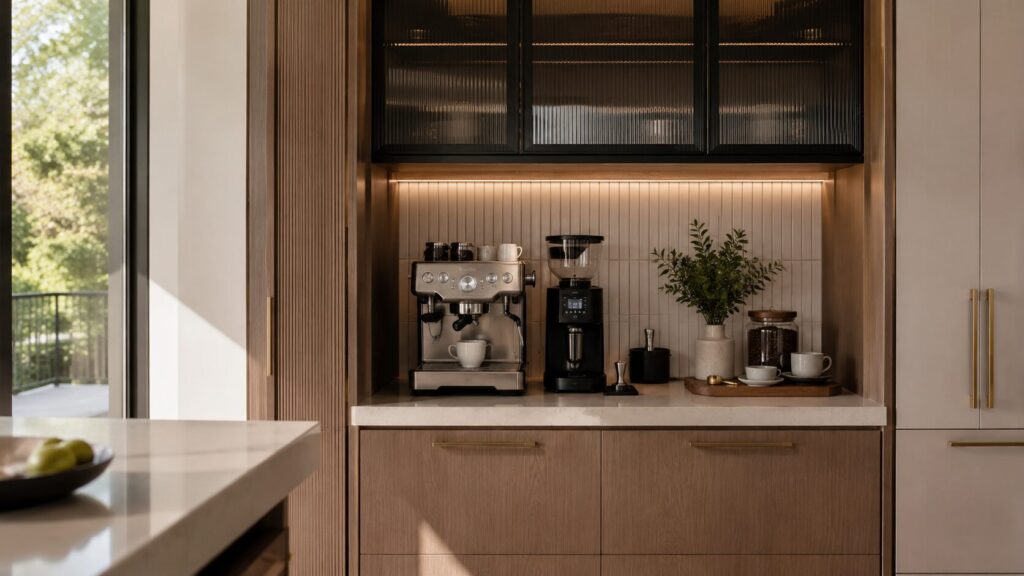
Designing an Espresso Corner: The Essentials
An espresso corner is the smaller cousin of a full coffee bar — usually a single appliance plus a few essentials in a tight footprint. Whether you’re going big or compact, a handful of practical details make or break the result.
Counter depth and clearance. Espresso machines are often taller and deeper than standard appliances. Measure your machine, then confirm it fits under any upper cabinets, including the height needed to lift the water reservoir or portafilter. Leave a few inches of breathing room.
Outlets. This is the detail people most often overlook. Plan for at least two dedicated outlets — one for the machine and one for a grinder — and consider adding outlets inside cabinets for an “appliance garage” look where gear stays plugged in but hidden.
Heat and steam. Espresso machines release heat and steam. Avoid placing them directly beneath a cabinet you’ll be reaching into constantly, and choose a durable countertop and backsplash material nearby.
Water access. Plumbed machines need a water line; most home setups use a refillable reservoir instead, which is simpler and perfectly capable. A nearby sink makes refilling and rinsing easier either way.
Cabinetry and Storage Ideas
Good storage is what separates a polished coffee bar from a cluttered countertop. Think about everything that needs a home: beans, pods, mugs, syrups, a grinder, filters, and cleaning supplies.
Open shelving above the bar is the most popular look — it keeps mugs and glassware within reach and feels relaxed and café-like. If you prefer a cleaner appearance, glass-front upper cabinets show off your collection while keeping dust out. For the gear itself, deep drawers with dividers organize pods and accessories far better than a cabinet shelf, and a shallow pull-out is ideal for filters and small tools.
If you want the whole thing to vanish on demand, build it into a cabinet with retractable or pocket doors. This “hidden coffee bar” approach is increasingly common because it suits open-concept homes where the kitchen is always on display.
Style, Finishes, and Lighting
A coffee bar is a chance to add a little personality. Many homeowners use it as an accent zone — a contrasting cabinet color, a different countertop, or a standout backsplash tile that sets the corner apart from the rest of the kitchen.
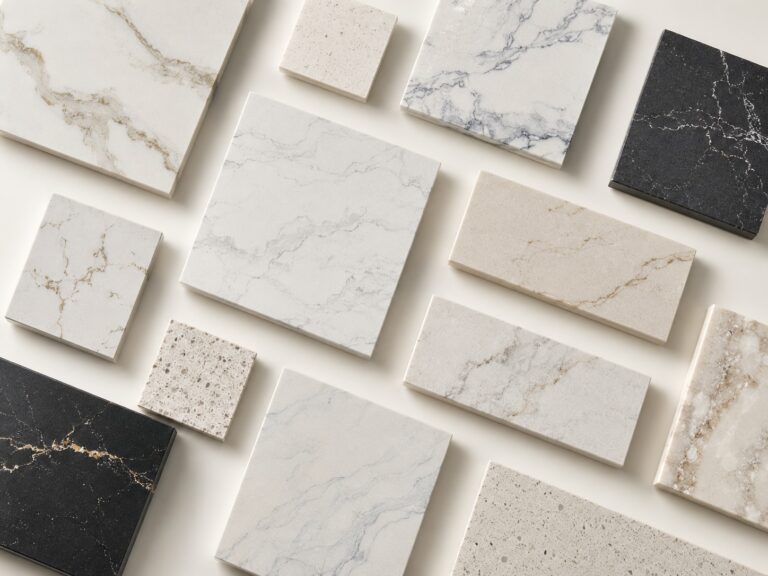
For countertops, durable, stain-resistant surfaces like quartz are practical given the inevitable coffee and water spills. A tile or stone backsplash protects the wall and adds texture. And don’t underestimate lighting: under-cabinet LED strips or a small pendant make the corner feel special and help you see what you’re doing before sunrise. Warm metal hardware in brass or matte black ties the look together.
Small-Space Coffee Bar Ideas
You don’t need a large kitchen to pull this off. In tight spaces, a single shelf with a wall-mounted rack, a slim rolling cart, or a repurposed corner can do the job. Floating shelves stacked above a compact machine create vertical storage without consuming floor space. Even a 24-inch slice of counter, paired with a couple of organized drawers, is enough for a functional espresso corner.
The key in a small kitchen is editing: keep only the essentials at the station and store backup supplies elsewhere so the zone stays uncluttered.
Frequently Asked Questions
How much space do I need for a coffee bar? A functional espresso corner can fit in as little as 24 inches of counter width. A fuller coffee bar with storage and multiple appliances usually works best with 36 inches or more.
Do I need plumbing for a built-in coffee bar? Not necessarily. Many machines use a refillable water reservoir, so a nearby sink is enough. Plumbing is only required for hard-plumbed espresso machines.
Where’s the best place to put a coffee station? Common choices include the end of a counter, a dedicated nook, inside a cabinet, or in an adjacent butler’s pantry. Pick a spot near an outlet and within easy reach of water.
How do I hide coffee bar clutter? Use a cabinet with retractable or pocket doors, deep drawers with dividers, and an appliance garage with built-in outlets so machines stay plugged in but out of sight.
Final Thoughts
A built-in coffee bar or espresso corner is one of the most rewarding additions you can make to a kitchen — it organizes a daily habit, frees up counter space, and adds a touch of café charm at home. Start by choosing a location near power and water, plan generous storage for your gear, and use finishes that let the corner feel like its own small moment within the kitchen.
If you’re planning a remodel, sketch your coffee routine first: which appliances you use, in what order, and where everything lands. Designing around that flow is the surest way to build a coffee bar you’ll actually love using every morning.